
Our name
Why “Anchor Hold”
Two meanings, both intended, and a reason we kept the stranger one.
The ordinary meaning
An anchor holds a vessel steady in water that refuses to hold still. It does not stop the water. It does not calm the weather. It does not move the boat somewhere safer. It simply makes the difference between drifting and staying, and it does that by reaching past the surface to something that does not move.
The letter to the Hebrews reaches for exactly that image, calling hope “an anchor for the soul, firm and secure” (Hebrews 6:19). It is worth noticing what the writer did not say. Not a harbor. Not a rescue. An anchor, which is a thing you use while you are still out in the weather.
That is most of why the word is in our name. The work we care about is not the moment someone decides to change. It is the long stretch afterward, when the decision has to survive an ordinary Tuesday.
The older meaning
There is a second sense of the word, and it is the one that actually shaped how we build.
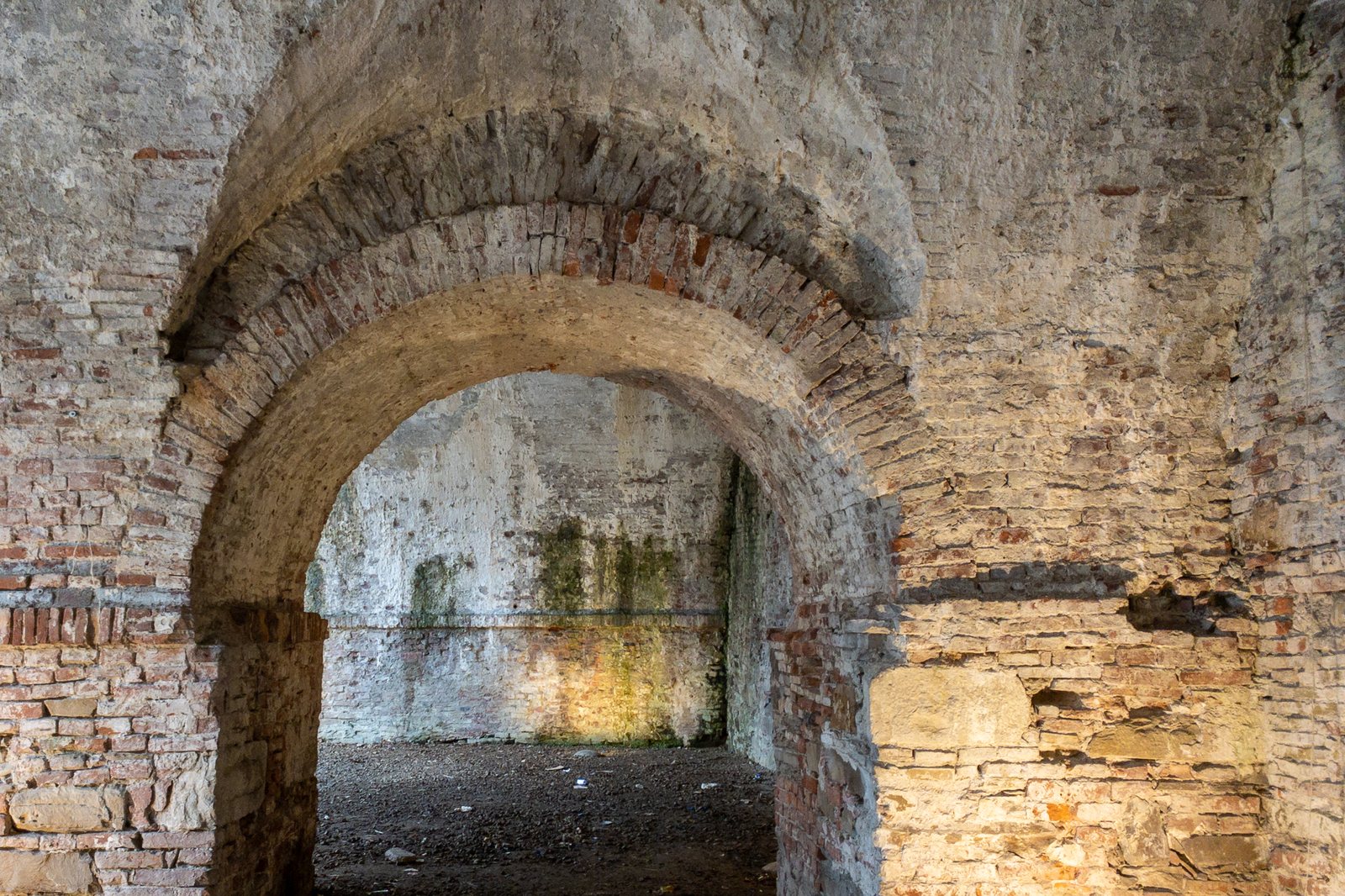
An anchorhold was a room. In medieval England and across much of Europe, a person could take vows as an anchorite and be enclosed in a small cell built into the wall of a church, usually for life. The enclosure was formal and often permanent. A bishop presided. In some places the rite borrowed language from a funeral, which tells you how seriously the arrangement was taken.
What happened inside was not dramatic. Fixed hours of prayer. Reading. Daily self-examination, done in the same place, at the same time, for years. The practice was ordinary by design. It was meant to be sustainable rather than intense, which is a distinction that gets lost easily and matters enormously.
The most famous anchorite in English is Julian of Norwich, who lived in a cell attached to St Julian’s Church and wrote Revelations of Divine Love from inside it. It is the earliest surviving book in English written by a woman, and it came out of a life organized around paying close attention in one small room.
Two windows
Here is the detail that made us keep the name.
The anchorhold had two windows. One opened into the sanctuary, so the anchorite could see the altar and take part in the life of the church. The other opened onto the street.
That second window was not decorative. People used it. Travelers, neighbors, and strangers stopped to ask for counsel, and the anchorite answered. Julian’s own writing records visitors. A life that looks from the outside like total withdrawal turns out, on inspection, to have had a door in it, deliberately, from the beginning.
Withdrawn, but not cut off. Set apart, and still reachable.
Why the second window is the point
Self-examination has a failure mode, and it is not laziness. It is the opposite. Attention turned inward with nothing to check it does not stay self-examination for long. It becomes rumination, then self-attack, then a private story about yourself that no one else is allowed to correct. People can spend years being extremely hard on themselves and mistake it for honesty.
The old design knew that, and built the window in. The daily practice was private. The person was not.
That is the shape we are after, and it is why our tools pair reflection with accountability rather than treating either one as sufficient alone. A check-in you do by yourself is the first window. Someone you have given permission to ask how you are actually doing is the second. Neither one works well for long without the other.
What we took from it
Three things, mostly.
Practices that last are built to be ordinary. The anchorite’s day was repetitive on purpose. Our tools are designed the same way: short, low-friction, possible on a bad day, because a practice you can only keep when you feel strong is not a practice.
Honesty needs a witness. We build for the person who is going to tell somebody, not for the person who is grading themselves.
And a fixed center is not the same as a fixed life. The anchor does not stop the water, and the anchorhold did not stop the street. Both of them just made it possible to stay put while everything else kept moving.